Natasha's Law Explained: What UK Restaurants and Cafes Must Do (Checklist)
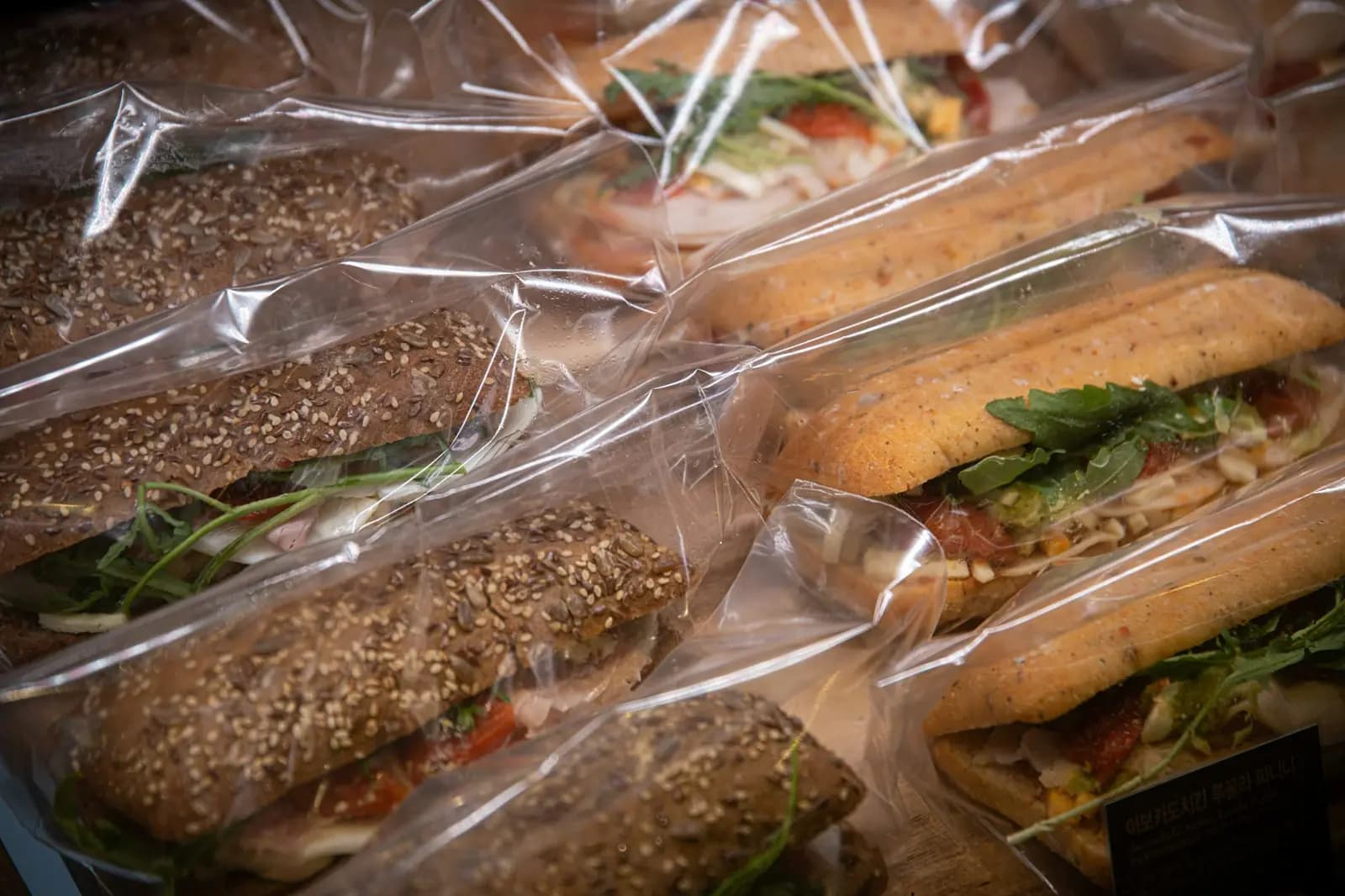
Natasha's Law is the UK rule, in force since 1 October 2021, that food prepacked for direct sale (PPDS) must show the food's name and full ingredients, with the 14 allergens emphasised. PPDS means food packed on the premises before the customer orders it. Made-to-order dishes are not PPDS, but you must still give allergen information for them.
This guide is for UK restaurants, cafes, pubs and takeaways. It explains what PPDS food is and is not, what the label must show, and what the law and the Food Standards Agency (FSA) expect for the dishes on your menu. It includes an example allergen matrix and a 12-step checklist you can copy. For the EU view of the same 14 allergens, see our EU allergen guide.
Key Takeaways
- Start date: PPDS labelling became mandatory across the UK on 1 October 2021.
- PPDS label: name of the food plus a full ingredients list, with the 14 allergens emphasised (for example in bold).
- Not PPDS: food that is not in packaging when the customer orders it, food made to order, and food packed at the customer's request.
- Menu dishes still need allergen information. The law lets you give it by any means, including orally, but you must then display a written notice telling customers to ask staff.
- FSA best practice (February 2025): give allergen information in writing and back it up with a conversation.
- Digital is fine, with a backup. If your allergen information is digital, the FSA says you should have another way for customers to access it.
Table of Contents
- What is Natasha's Law?
- What counts as PPDS food?
- PPDS vs not PPDS: examples
- What a PPDS label must show
- Who Natasha's Law applies to
- Allergen rules for restaurant menus (non-prepacked food)
- The FSA's 2025 best practice guidance
- Example allergen matrix
- Natasha's Law compliance checklist
- Where a QR menu helps, and where it does not
What Is Natasha's Law?
"Natasha's Law" is the common name for the PPDS labelling rules that came into force on 1 October 2021. The FSA's guidance for restaurants, cafes and pubs says it "applies to any food business that produces PPDS food".
The law is named after Natasha Ednan-Laperouse, who died in 2016 after an allergic reaction to sesame in a baguette. Food made and packed in the seller's own kitchen did not need an ingredients label at that time. The coroner raised this gap in a Prevention of Future Deaths report in October 2018.
The legal text differs by nation, but the rule is the same:
- England: The Food Information (Amendment) (England) Regulations 2019, which added regulations 5A (ingredients) and 6A (name of the food) to the Food Information Regulations 2014. The SI says they "come into force on 1st October 2021".
- Scotland: The Food Information (Scotland) Amendment Regulations 2021.
- Wales and Northern Ireland: the FSA lists The Food Information (Wales) (Amendment) (No. 2) Regulations 2020 and The Food Information (Amendment No. 2) Regulations (Northern Ireland) 2020 in Annex A of its best practice guidance.
What Counts as PPDS Food?
The FSA defines PPDS food as "food that is packaged at the same place it is offered or sold to consumers", and that is "ready for presentation to the consumer before it is ordered or selected". It also covers sites where a business works from more than one location, such as a shopping centre.
Food is PPDS when its packaging passes all three tests in the FSA definition of packaging:
- The food is fully or partly enclosed by the packaging.
- The food cannot be altered without opening or changing the packaging.
- The food is ready for sale to the final consumer.
The simple question to ask is: was this food packed here before the customer asked for it? If yes, it is probably PPDS. If it was packed after the order, or it is not packed at all, it is non-prepacked food.
Food packed by another business at a different site is "prepacked" food, not PPDS. It needs a full manufacturer's label with all mandatory details. Use the FSA's allergen and ingredients food labelling decision tool if you are not sure which category a product falls into.
PPDS vs Not PPDS: Examples for Restaurants and Cafes
Every example below comes from the FSA's sector guidance for restaurants, cafes and pubs.
| Item | PPDS? | Why |
|---|---|---|
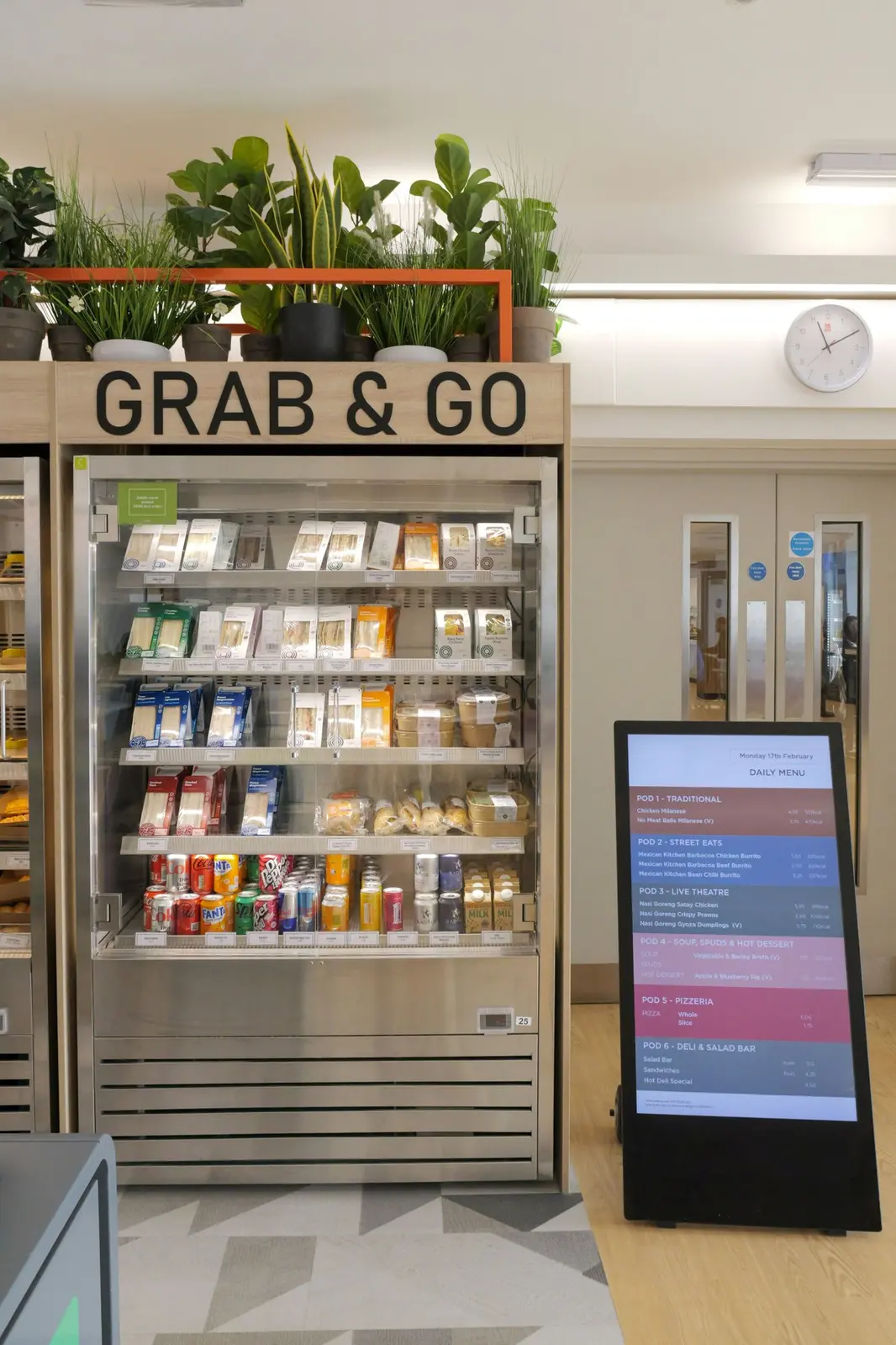
| Prepacked sandwiches or salad boxes made in your kitchen | Yes | Packed on site before the customer orders |
| Prepacked paninis or boxed pizza that you reheat on request | Yes | Packed before the order; reheating does not change that |
| Pies in packaging, soup already in pots | Yes | Packed and ready before the order |
| A cake wrapped in cling film | Yes | Fully enclosed; cannot be altered without opening |
| Hot drinks poured and lidded before a rush | Yes | Packed in anticipation of orders |
| Food wrapped and kept under a hot lamp before it is ordered | Yes | Prepacked in anticipation of orders |
| Sushi presented to the customer under a protective dome | Yes | A single item with its packaging, ready for presentation |
| Hot drinks made to order | No | Made after the order |
| Unpackaged cakes on display | No | No packaging |
| An open salad bar | No | No packaging |
| Complimentary bread placed on tables, unpackaged | No | No packaging (allergen information is still required) |
| A burger served on an open cardboard tray | No | Can be altered without opening the packaging |
| A large cake under a dome, sliced and plated to order | No | Not a single item ready for presentation |
| Dishes made to order from your menu | No | Non-prepacked food |
Where the food is eaten does not matter. The FSA says that if food is PPDS, the labelling rules apply whether the customer eats it on the premises or takes it away.
What a PPDS Label Must Show
The FSA puts the core rule simply: "Labels on PPDS food need to show the name of the food and the ingredients list." The allergens must be emphasised within that list.
- Name of the food. Required by regulation 6A in England.
- Full ingredients list, in descending order of weight. Required by regulation 5A, which applies the ingredients-list rules of assimilated Regulation (EU) No 1169/2011.
- Allergen emphasis. Any of the 14 allergens must stand out. The FSA says emphasis "can be added by using bold type, capital letters, contrasting colours or underlined text".
- Minimum text size. Regulation 5A applies Article 13(1) to (3), which sets an x-height of at least 1.2 mm, or 0.9 mm when the largest surface of the pack is under 80 cm².
- Compound ingredients. If you list "bread" in a sandwich, give its ingredients after the word "bread", or list every component separately.
Handwritten labels are allowed if they meet the font size rules. The explanatory note to the England SI also records an exemption from the ingredients list for packs whose largest surface is under 10 cm².
Example PPDS label (illustrative only):
Egg Mayonnaise Sandwich
Ingredients: Bread (WHEAT flour, water, yeast, salt, SOYA flour), free-range EGG, mayonnaise (rapeseed oil, water, EGG yolk, spirit vinegar, MUSTARD seed, salt), cress.
Your real label must reflect your real recipe and your suppliers' specifications. Do not copy this one.
Who Natasha's Law Applies To
It applies to any food business that produces PPDS food. The FSA names coffee shops, restaurant chains, independent restaurants, supermarket and department store cafes, and pubs. It can also cover food sold from mobile or temporary outlets, and food kept behind a counter as well as on self-service shelves.
Separate FSA pages cover fast food and takeaways and schools, colleges and nurseries.
Online and phone orders are different. The PPDS label rules do not apply to distance selling. Instead, the FSA says mandatory allergen information must be available "before they purchase the product and also at the moment of delivery". Some businesses label everything anyway, so they do not have to run two systems.
Allergen Rules for Restaurant Menus (Non-Prepacked Food)
Most restaurant food is non-prepacked. It does not need a PPDS label. But it is not exempt from allergen rules. The FSA says you "must provide information on the 14 major allergens to consumers", and that you have "some choice in how you provide this information".
The legal detail for England is in regulation 5 of the Food Information Regulations 2014:
- You may give allergen information "by any means the operator chooses, including... orally".
- If you give it orally, you "must indicate that details of that substance or product can be obtained by asking a member of staff".
- That indication must be on a label attached to the food, or on "a notice, menu, ticket or label that is readily discernible" where the customer chooses the food.
The duty itself comes from Article 44 of assimilated Regulation (EU) No 1169/2011, which makes allergen information "mandatory" for non-prepacked food. The 14 allergens are the same ones listed in the EU Annex II.
Penalties. Under regulation 10, failing to provide the required allergen information is an offence. Regulation 11 sets a fine "not exceeding level 5 on the standard scale". In England and Wales, section 85 of LASPO 2012 turned fines of £5,000 or more into fines "of any amount".
Scotland, Wales and Northern Ireland have their own Food Information Regulations with equivalent rules. Check your local authority if you are unsure. It is usually trading standards or environmental health.
The FSA's 2025 Best Practice Guidance on Written Allergen Information
On 24 February 2025 the FSA published best practice guidance on allergen information for non-prepacked foods. It applies to England, Wales and Northern Ireland. It covers cafes, restaurants, fast food outlets, delis, bakeries and market stalls, of all sizes.
The key change: the FSA now says best practice is to make allergen information "easily available in writing" and to "ensure staff are able to support this with a conversation". The guidance is clear that the legal minimum "has not changed". You are "not required by law to follow best practice guidance", but following it "should ensure you meet the relevant responsibilities and consumer expectations".
What the guidance recommends:
- Four principles. Written information should be easy to use, clear, comprehensive (all 14 allergens, not a subset) and accurate.
- Words or symbols. If you use symbols, the allergen name should be part of the symbol, or you must show a key. The FSA offers free allergy symbols.
- Name the specific nut or cereal. Write "nuts (almond)", not just "nuts". Example from the guidance: "Chicken Tikka Masala (Contains: milk, nuts (almond))".
- Break dishes into components where you can, so a guest can drop the coleslaw instead of the whole burger.
- Put it where guests see it, "if possible, without consumers having to ask for it", for example on the main menu (paper or digital), in a booklet or on a wall matrix.
- Signpost it if it is not on the menu, for example: "We have a menu with allergen information, please speak to staff who will be happy to provide it".
- Have a digital backup. If you use a digital format, have "an alternative way of accessing the information" for people who cannot use it, and in case the digital version fails.
- Online menus: allergen information should ideally be "no more than 'one click away'".
- Ask every guest. If you cannot, display a message such as "Please talk to us if you have a food allergy, intolerance or coeliac disease. We want to cater safely for everyone."
The guidance says its next scheduled review is September 2026, so check the GOV.UK page for updates. In Scotland, Food Standards Scotland ran a consultation on written allergen information for the non-prepacked sector from 23 February to 17 May 2026. It concerns possible changes to guidance, not new law.

Example Allergen Matrix (Allergen Chart) for a UK Menu
An allergen matrix is a grid of dishes against the 14 allergens. The FSA includes an example in Annex B of its guidance and links to an editable version. The sample below is illustrative only. Build yours from your own recipes and supplier specifications.
| Allergen | Chicken Caesar salad | Beef burger, sesame bun | Thai green curry | Sticky toffee pudding |
|---|---|---|---|---|
| Cereals containing gluten (name the cereal) | Y (wheat, croutons) | Y (wheat, bun) | - | Y (wheat) |
| Crustaceans | - | - | Y (shrimp paste) | - |
| Eggs | Y | Y (mayonnaise) | - | Y |
| Fish | Y (anchovy) | - | Y (fish sauce) | - |
| Peanuts | - | - | - | - |
| Soybeans | - | - | - | - |
| Milk | Y (parmesan) | Y (cheese) | - | Y |
| Nuts (name the nut) | - | - | - | - |
| Celery | - | - | - | - |
| Mustard | Y (dressing) | Y (mayonnaise) | - | - |
| Sesame | - | Y (bun) | - | - |
| Sulphur dioxide and sulphites | - | - | - | - |
| Lupin | - | - | - | - |
| Molluscs | - | - | - | - |
Three tips for a matrix that holds up:
- Use "Y" and a clear dash. A blank cell can look like "not checked". The FSA also warns that if you show "free from" claims on the same document, it must be very clear which is which.
- Add a version date at the top and a named person who signs it off after each recipe or supplier change.
- Keep the 14 allergens even if a column is empty. The FSA asks for all 14, not just the common ones.
Natasha's Law Compliance Checklist for UK Restaurants and Cafes
Work through these 12 steps in order. Steps 1 to 5 cover PPDS food. Steps 6 to 12 cover your menu and your team.
1. List every item you pack before it is ordered
Walk the kitchen, the counter, the chiller and the hot hold. Write down every item that is packed on site before a customer asks for it. Include grab-and-go sandwiches, pots of soup, wrapped cakes, salad boxes and drinks you pre-lid for a rush.
2. Classify each item: PPDS, prepacked or non-prepacked
Apply the three packaging tests. Packed here before the order means PPDS. Packed by a supplier elsewhere means prepacked, with a supplier label. Packed after the order, or not packed at all, means non-prepacked.
3. Collect a specification for every ingredient
Get product specifications or retain the labels for every bought-in ingredient, including bread, sauces and spice mixes. Compound ingredients such as bread or mayonnaise need their own ingredients for your label.
4. Write PPDS labels with the name, full ingredients and emphasised allergens
List ingredients in descending order of weight. Emphasise each of the 14 allergens in bold, capitals, contrasting colour or underline. Check the minimum x-height of 1.2 mm, or 0.9 mm on small packs.
5. Check labels against the product every time a recipe or supplier changes
One substituted ingredient can make a label wrong. Add a label check to your goods-in routine and to every recipe change.
6. Show allergen information for every dish in writing
The law allows oral information with a notice. The FSA's best practice is written information backed by a conversation. Show it on the menu, in an allergen booklet or on a matrix in a customer area.
7. Cover all 14 allergens and name the nut or cereal
Do not limit the list to the "big" allergens. Write "nuts (almond)" and "cereals containing gluten (wheat)" so a guest with a specific allergy can decide.
8. Display a clear allergen notice where guests order
If allergen information is not on the main menu, the notice must tell guests to ask staff. Put it at the top of the menu or at eye level at the counter.
9. Include specials, drinks and complimentary items
The FSA says allergen information applies to food "offered complimentarily or otherwise without charge" too. Specials boards, cocktails, wine by the glass and free table bread all count.
10. Give allergen information before and at delivery for online and phone orders
For delivery and click-and-collect, make the information available before the order is placed and again when the food arrives, for example with a sticker on the container.
11. Train staff and decide who takes allergy orders
Staff should know where the allergen information is and must never guess. The FSA offers free food allergy and intolerance training. Decide whether every server takes allergy orders or whether a supervisor or head chef does.
12. Keep records and a paper backup
Keep recipes, supplier specifications and dated versions of your matrix. If your allergen information is digital, keep a printed copy behind the counter as the FSA's backup recommendation suggests.
Where a QR Menu Helps, and Where It Does Not
A digital menu cannot label PPDS food. The label must be "directly on the package or on a label attached to the package", so a QR code on the counter does not replace it.
For non-prepacked dishes, a digital menu can carry your written allergen information. The FSA lists "the main menu (paper or digital)" as one place to put it. What matters is that it is correct and easy to reach before the guest orders.
A practical setup looks like this:
- Allergens stored once per dish, so the menu, any printed matrix and any translations show the same data.
- Changes published straight away when a recipe changes, without a reprint.
- A printed matrix behind the bar for guests who do not use a phone, or if the Wi-Fi fails.
- A notice on the table card: "Please talk to us if you have a food allergy, intolerance or coeliac disease."
On Pro plans, QR Menu Generator works this way. Each dish can carry "contains" tags for the 14 UK and EU allergens, and diners can filter the menu by allergen. Pro and Pro Plus include a menu change audit log with CSV export, which can help you show when an allergen entry changed. You still enter the data and you stay responsible for its accuracy. A tool does not make a menu compliant by itself. Tags show the allergen group only, so name the specific nut or cereal in the dish description.
For layout tips, see our guide to making your restaurant menu accessible. If you also serve guests in other languages, read our multilingual menu guide. For the rules in the US, EU, Canada, Australia and India, see our restaurant allergen laws by country reference table.
Show allergen information on a digital menu you can update without reprinting
On Pro, you tag each dish with its allergens once and guests filter the menu on their phone. Allergen tags and the diner allergen filter are not on the free plan. You can start free (1 restaurant, 10 categories, 30 products) and upgrade when you need them. 500+ restaurants use QR Menu Generator. Create your menu free, try the demo or compare plans.
Last reviewed: October 2026. This article summarises UK food information law and FSA guidance for general information. It is not legal advice. Rules differ slightly between England, Scotland, Wales and Northern Ireland. Check the FSA or Food Standards Scotland guidance, and ask your local authority's trading standards or environmental health team about your own business.
Cover photo by JIWON KANG on Unsplash.
Frequently Asked Questions
- What is Natasha's Law?
- Natasha's Law is the UK rule, in force since 1 October 2021, that food prepacked for direct sale (PPDS) must carry a label showing the name of the food and a full ingredients list, with any of the 14 allergens emphasised. PPDS food is food packed on the same premises before a customer orders it.
- Does Natasha's Law apply to restaurant menus?
- No. Dishes made to order are non-prepacked food, not PPDS, so they do not need a PPDS label. But restaurants must still give allergen information for the 14 allergens. In England you may give it by any means, including orally, if a written notice tells customers to ask staff. The FSA's 2025 best practice is written information plus a conversation.
- What must be on a PPDS label?
- The name of the food and a full ingredients list in descending order of weight, with any of the 14 allergens emphasised, for example in bold, capitals, contrasting colour or underline. The text must meet the minimum x-height of 1.2 mm, or 0.9 mm on packs whose largest surface is under 80 cm2.
- Is a sandwich made to order covered by Natasha's Law?
- No. The FSA says food made to order and food placed into packaging at the customer's request is not PPDS. A sandwich made and wrapped before the customer orders it is PPDS and needs a full label.
- What is the penalty for not giving allergen information in England?
- Under the Food Information Regulations 2014, failing to provide the required allergen information is an offence with a fine not exceeding level 5 on the standard scale. In England and Wales, section 85 of LASPO 2012 made such fines unlimited.
- Can a QR code menu provide allergen information in the UK?
- For non-prepacked dishes, yes. The FSA lists the main menu, paper or digital, as one place for written allergen information. It also says digital formats should have an alternative way of access, such as a printed allergen matrix. A QR code cannot replace the label on PPDS food.
About the author
Evrenus Fırat Polat
Restaurant technology expert and founder of QR Menu Generator. Passionate about helping restaurant owners harness digital tools to grow their business.