Why Nightclubs and Dimly Lit Bars Need Digital Menus: The Ultimate Guide to Elevating the Guest Experience
Setting the Scene: The Friction in the Dark
Imagine the scene: It is 11:30 PM on a Saturday. Your venue is packed, the DJ is spinning an incredible set, and the lighting is perfectly dimmed to create that exclusive, intimate atmosphere your patrons love. The vibe is impeccable. Yet, at table 14, a group of potential high-spenders is struggling. They are squinting, tilting a sticky laminated menu toward a faint candle, and inevitably, out come the smartphone flashlights. Suddenly, the carefully curated ambiance is punctuated by harsh, blinding beams of white light. It is awkward for the guests and disruptive to the surrounding tables.
This scenario is played out nightly in speakeasies, lounges, nightclubs, and dive bars across the globe. The very element that defines your venue's character—low lighting—acts as the biggest barrier between your customers and your products. In an industry defined by seamless experiences and rapid service, physical menus in dark environments are an outdated friction point.
The shift towards digital solutions isn't just a post-pandemic hangover; it is an operational imperative for modern nightlife venues. This comprehensive guide explores exactly why nightclubs and dimly lit bars need digital menus, and how implementing them can revolutionize your service, protect your ambiance, and significantly boost your bottom line.
Table of Contents
- The Readability Factor: Solving the Flashlight Problem
- Dynamic Inventory: Handling the Friday Night Rush
- Accelerating Speed of Service and Table Turnover
- Visual Upselling: Selling the Sizzle in the Dark
- Operational Efficiency and Cutting Print Costs
- Leveraging Analytics for Smarter Bar Management
- Best Practices for Implementing QR Menus in Dark Venues
- Conclusion & Getting Started
The Readability Factor: Solving the Flashlight Problem
The primary argument for why nightclubs and dimly lit bars need digital menus is undeniably practical: readability. When the lights go down, paper menus become obsolete. The reliance on phone flashlights to read a drink list is more than just a minor inconvenience; it is a fundamental break in the customer journey.
Every moment a customer spends squinting at a menu is a moment they aren't ordering, drinking, or enjoying the entertainment. It adds friction to the purchasing decision. If reading the menu is too difficult, customers often default to ordering something basic just to get it over with, rather than exploring your signature cocktails or higher-margin premium spirits.
The Smartphone Screen Advantage
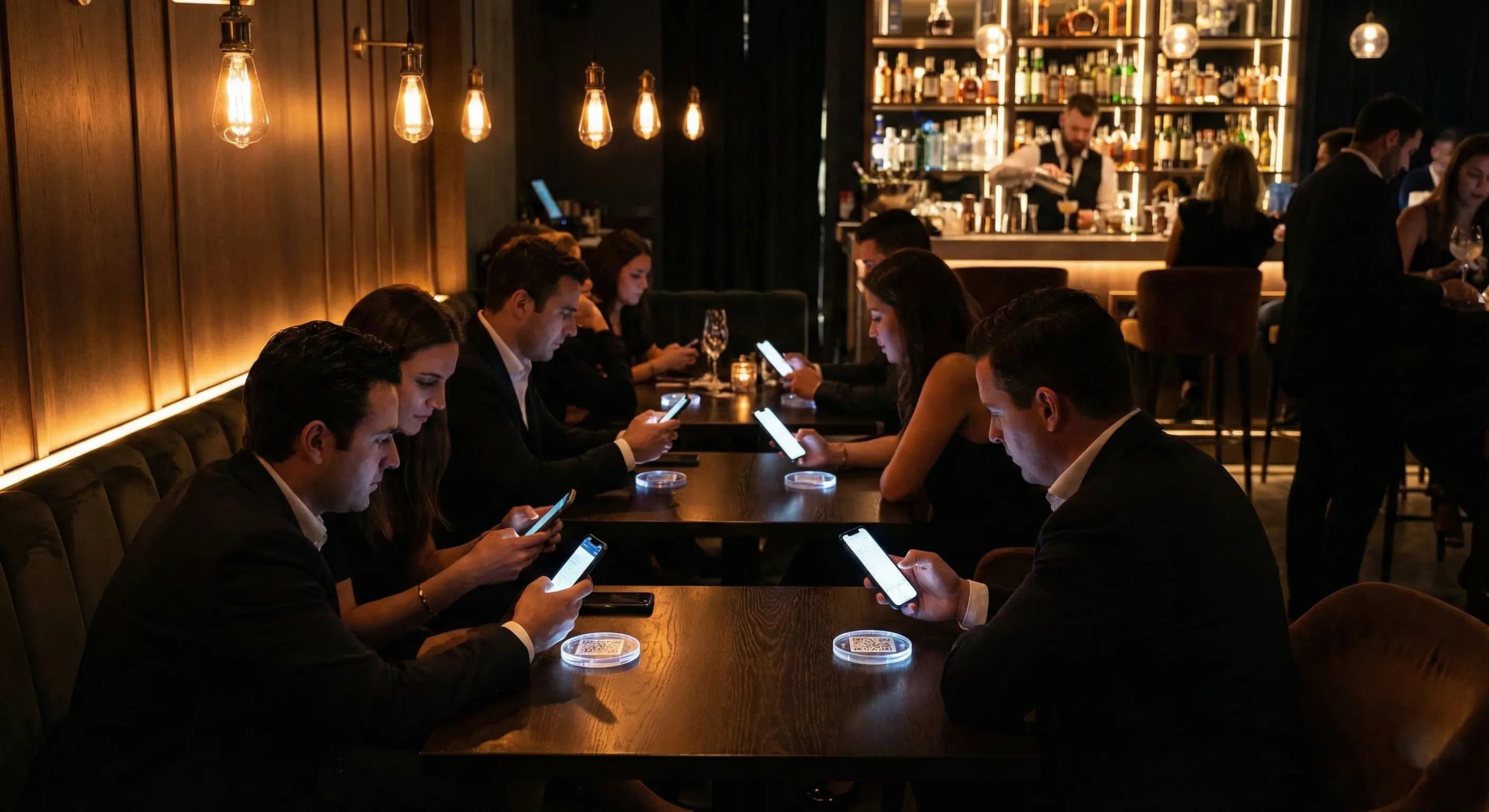
Your customers already have the perfect solution in their pockets. Smartphones are backlit. By utilizing a QR code menu, you transfer the ordering interface from a dark piece of paper to a brightly lit, high-definition screen that is easy to read regardless of the ambient lighting. The customer experience immediately shifts from frustration to ease. They scan, the menu pops up instantly, and they can browse your offerings in glorious detail without ruining the mood lighting for everyone else.
Dynamic Inventory: Handling the Friday Night Rush
Nightlife is unpredictable. On a busy weekend night, inventory fluctuates wildly. You might run out of a specific craft beer, a popular tequila brand, or a crucial ingredient for your signature cocktail by 1 AM. With physical menus, you have two bad options: keep serving menus listing items you don't have, leading to awkward tableside corrections and disappointed customers, or awkwardly cross items out with a marker, which looks unprofessional.
Instant Updates, Zero Friction
Digital menus solve this instantly. With platforms like QR Menu Generator, you can hide an out-of-stock item from your menu in seconds from any device. Did the delivery of mint arrive late for the mojitos? Hide it. Did you just get a limited batch of rare whiskey? Add it as a flash special immediately.
This agility is crucial for maintaining a high level of service. Customers only see what they can actually order, eliminating the "sorry, we're out of that" conversation that slows down bartenders and frustrates patrons. This dynamic capability is essential for high-volume venues that need to adapt on the fly.
Accelerating Speed of Service and Table Turnover
In a nightclub or busy bar, speed is everything. The throughput of your bar directly correlates to your revenue for the night. Traditional menu browsing is a bottleneck. Customers wait for a server to bring a menu, they spend time struggling to read it, wait again for the server to return, and then place their order.
Digital QR menus streamline this entire process. The menu is available the second they sit down or approach the bar. Patrons can begin browsing immediately before a server even greets them. By the time your staff arrives, the customers are ready to order. This shaves critical minutes off every interaction.
Furthermore, in venues offering table service, digital menus reduce the number of trips staff need to make to a table. Less time running back and forth with physical menus means your staff can focus on running drinks and upselling, ultimately leading to faster table turnover and higher sales volume per hour.
Visual Upselling: Selling the Sizzle in the Dark
How do you sell a $18 craft cocktail in the dark using only text? It's difficult. You rely entirely on the description and the customer's imagination. Physical menus in dark bars rarely feature high-quality photos because they are expensive to print and hard to see anyway.
A digital menu is a vibrant, visual sales tool. On a backlit smartphone screen, high-resolution photos of your drinks look enticing and irresistible. You aren't just listing ingredients; you are selling the visual appeal of the drink—the garnish, the glassware, the condensation on the glass.
Strategic Menu Engineering
Digital platforms allow you to highlight high-margin items effectively. You can place your signature cocktails at the top with stunning visuals, use "Chef's Choice" or "Bartender's Favorite" badges to guide choices, and easily promote bottle service packages. Humans are visual creatures; seeing a delicious cocktail makes them far more likely to order it than just reading its name in dim light. This visual merchandising capability is a massive driver for increasing average order value.
Operational Efficiency and Cutting Print Costs
Maintaining physical menus in a high-traffic nightlife environment is expensive and time-consuming. Menus get spilled on, torn, sticky, and worn out quickly. They need constant re-printing and laminating. Every time you want to change a price, add a seasonal special, or simply replace damaged stock, it costs money and administrative time.
Switching to digital eliminates printing costs entirely after the initial setup of your QR code signage. Considering the affordable pricing plans available for digital menu software—often costing less per month than a single round of printing—the return on investment is nearly immediate.
Beyond hard costs, think about staff efficiency. No more time spent cleaning sticky menus at the end of a long shift. No more time spent organizing and replacing menu inserts before opening. Your staff can focus on preparation and service, not administrative tasks.
Leveraging Analytics for Smarter Bar Management
Physical menus provide zero feedback. You don't know how many people looked at the wine list versus the cocktail list, or which items are viewed most frequently but ordered least (indicating a potential pricing or description issue).
Digital menus turn your menu into a data collection tool. Modern platforms provide detailed analytics features that offer deep insights into customer behavior. You can track stats like:
- Peak Viewing Times: When are customers actively browsing the menu?
- Popular Categories: Are your patrons looking more at spirits, cocktails, or late-night food bites?
- Item Views vs. Sales: Identify dishes or drinks that attract attention but aren't converting, allowing you to adjust pricing or recipes.
For venues with multiple locations, platforms offering advanced analytics, such as our Pro Plus tier, allow you to compare performance across different venues, standardizing success and identifying areas for improvement. This data-driven approach allows bar managers to move beyond intuition and make informed decisions about menu engineering, pricing strategies, and staffing levels.
Best Practices for Implementing QR Menus in Dark Venues
A common concern for nightlife venue owners is the technical feasibility: "Will QR codes actually scan in the dark?" The answer is yes, but placement and execution strategy are critical. You cannot simply tape a standard white paper QR code to a dark table and expect success.
1. Strategic Lighting and Material
The QR code itself doesn't need to be bright, but there needs to be enough contrast for a phone camera to pick it up. Avoid placing QR codes in completely shadowed dead zones. Utilize existing ambient light sources—place codes near table candles, under bar rail lighting, or near lighting fixtures.
Furthermore, consider the material. Glossy laminates can reflect ambient light, creating glare that makes scanning difficult. Matte finishes are far superior for low-light environments. Engraved metal or wood plaques can also work well if there is sufficient overhead or side lighting to create contrast.
2. Creative Integration into the Vibe
Don't make the QR code look like an afterthought. Integrate it into the venue's aesthetic.
- Backlit Coasters: A fantastic solution for bars. The coaster itself provides the necessary light for scanning.
- LED Table Tents: Small, battery-operated LED acrylic stands that illuminate the QR code are highly effective and look premium.
- Entryway Signage: Place a large, well-lit QR code at the host stand or entryway so patrons can scan it while waiting to be seated or as they enter the main room.
- The Bar Top: Embed codes directly into the bar surface, ideally near the rail lighting.
3. Staff Training acts as the Bridge
Your staff needs to champion the system. In a dark, loud environment, verbal cues are essential. When seating guests or greeting them at the bar, staff should point out the QR code and briefly explain that the full, updated menu is available there for easy reading in the low light. If a guest struggles, staff should be ready to assist with their own phone light momentarily to facilitate the first scan.
Conclusion & Getting Started
The romantic notion of a dimly lit bar shouldn't come at the expense of the customer experience. In the modern hospitality landscape, convenience and speed are paramount. Nightclubs and dimly lit bars need digital menus not just to keep up with technology, but to actively solve the inherent operational challenges of their unique environments.
By adopting digital QR menus, you eliminate the "flashlight struggle," ensure your inventory is always accurate, speed up service during crunch time, and unlock powerful visual upselling tools—all while maintaining the dark, moody atmosphere that defines your brand. It’s a low-cost, high-impact upgrade that modernizes your venue instantly.
Ready to bring your menu out of the dark ages? You can get started today without spending a dime. Create your beautiful, mobile-friendly digital menu in minutes. Click here to create your free account at QR Menu Generator and see the difference tonight.
Frequently Asked Questions
- Do QR codes actually work in very dark nightclubs?
- Yes, absolutely. Modern smartphone cameras are very sensitive. However, success depends on placement. We recommend using matte finish materials to avoid glare, placing codes near ambient light sources like candles or bar lights, or utilizing backlit solutions like LED table tents or illuminated coasters for the best results.
- How does QR Menu Generator help manage out-of-stock drinks during a busy night?
- QR Menu Generator allows for instant, real-time updates from any device. If your bar runs out of a specific spirit or ingredient during a rush, a manager can log in on their phone and hide that item from the digital menu in seconds. This prevents customers from ordering unavailable items and saves bartenders valuable time.
About the author
Evrenus Fırat Polat
Restaurant technology expert and founder of QR Menu Generator. Passionate about helping restaurant owners harness digital tools to grow their business.