The 14 Allergens Every EU Restaurant Must Declare on Its Menu (2026 Guide)
EU Regulation (EU) No 1169/2011 requires every restaurant, café, bar and hotel in the European Union to tell guests which of 14 specified allergens are present in the food they serve. The obligation applies to non-prepacked food — which is what a restaurant serves — under Article 44, and there is no exemption for small venues. A digital menu is one of the cleanest ways to meet it, because the information stays attached to the dish and updates the moment the recipe changes.
This guide lists all 14 allergens exactly as they appear in Annex II of the Regulation, explains what "emphasis" means in practice, and covers how the rules apply to a QR code menu.
Key Takeaways
- 14 allergens are listed in Annex II of Regulation (EU) No 1169/2011. All of them must be declared when present.
- Restaurant food is non-prepacked food. Article 44 makes allergen information mandatory for it.
- Sulphites are the only allergen with a numerical threshold — declarable above 10 mg/kg or 10 mg/litre expressed as total SO₂.
- Allergens must stand out from the rest of the ingredient information, typically through bold type, capitals, colour or a distinct icon.
- Member States decide the exact delivery method for non-prepacked food, but if information is given orally, a clearly signposted written notice must point guests to it.
- "May contain" is not a substitute for declaring an allergen that is actually an ingredient.
Table of Contents
Which Allergens Must an EU Restaurant Declare?
An EU restaurant must declare 14 allergens: cereals containing gluten, crustaceans, eggs, fish, peanuts, soybeans, milk, nuts, celery, mustard, sesame seeds, sulphur dioxide and sulphites, lupin, and molluscs. These are set out in Annex II of Regulation (EU) No 1169/2011 and apply to every dish and drink served, including daily specials and staff recommendations.
The 14 Allergens in Annex II of Regulation (EU) No 1169/2011
The list below follows the order and wording used in the Regulation.
1. Cereals containing gluten — wheat, rye, barley, oats, spelt, kamut
Covers wheat, rye, barley, oats, spelt, kamut (khorasan wheat) and their hybridised strains, plus products made from them. In a restaurant kitchen this reaches far beyond bread and pasta: soy sauce, thickened sauces and gravies, beer, breaded items, and most fried items sharing a fryer with breaded products. Certain glucose syrups and cereal-derived distillates are exempt under the Regulation.
2. Crustaceans — prawns, crab, lobster, crayfish
Includes prawns, shrimp, crab, lobster, langoustine and crayfish, and anything made from them. Watch for shellfish stock in bisques and paella bases, and for shrimp paste in South-East Asian dishes.
3. Eggs — including egg used as a binder or glaze
Whole eggs and egg products. Common hidden sources are mayonnaise, hollandaise, fresh pasta, mousses, meringue, egg wash on pastry, and many batters and binders in burgers and meatballs.
4. Fish — including fish used in stocks and sauces
All fish and fish products. In practice the risk is invisible fish: Worcestershire sauce, Caesar dressing, Thai and Vietnamese fish sauce, and fish-based stocks used in risottos and soups. Certain fish gelatine and isinglass uses are exempt.
5. Peanuts — a legume, not a tree nut
Peanuts are listed separately from nuts because they are legumes and the allergy profile differs. Peanut oil, peanut flour and satay sauces are the usual sources, along with cross-contact in fryers and in desserts.
6. Soybeans — soy sauce, tofu, edamame, emulsifiers
Soybeans and soy products, including tofu, tempeh, edamame, soy sauce, miso and soy-based emulsifiers such as soy lecithin. Fully refined soybean oil and certain soy-derived tocopherols are exempt.
7. Milk — including lactose
Milk and products made from milk, including lactose. Butter, cheese, cream, yoghurt, ghee, whey and casein all count, as does butter used to finish a sauce or brush a steak. Certain whey used for distillate production and lactitol are exempt.
8. Nuts — almonds, hazelnuts, walnuts, cashews, pecans, Brazil nuts, pistachios, macadamias
The Regulation names eight tree nuts: almonds, hazelnuts, walnuts, cashews, pecan nuts, Brazil nuts, pistachio nuts and macadamia or Queensland nuts. Pesto, praline, nut oils, marzipan and many gluten-free flours are frequent sources. Nut distillates for spirits are exempt.
9. Celery — including celeriac, celery salt and stock
Celery stalks, leaves, seeds and celeriac. This is one of the most under-declared allergens in kitchens because celery is a base ingredient in most stocks, mirepoix, soups, and in celery salt used as a seasoning.
10. Mustard — seeds, powder, and prepared mustards
Mustard seeds, mustard powder and prepared mustard. Hidden sources include vinaigrettes, marinades, curry powders, mayonnaise blends, sausages and many spice mixes.
11. Sesame seeds — including tahini and sesame oil
Sesame seeds and sesame products such as tahini, halva, hummus and sesame oil. Burger buns and flatbreads topped with sesame are an easy oversight because the topping is treated as decoration rather than an ingredient.
12. Sulphur dioxide and sulphites above 10 mg/kg or 10 mg/litre
Sulphur dioxide and sulphites must be declared at concentrations above 10 mg/kg or 10 mg/litre, expressed as total SO₂. This is the only allergen in Annex II with a numerical threshold. Wine, dried fruit, some vinegars, processed potato products and many preserved goods sit above it.
13. Lupin — lupin flour and lupin seeds
Lupin seeds and lupin flour. Increasingly common in gluten-free and high-protein baking, and in some pasta and vegan products, which makes it easy to miss on a menu that has recently added gluten-free options.
14. Molluscs — mussels, oysters, squid, snails
Mussels, clams, oysters, scallops, squid, octopus and snails. Oyster sauce in Asian dishes is the classic hidden source, and molluscs are listed separately from crustaceans because the allergies are distinct.
What "Emphasis" Legally Means
Under Article 21, allergens listed in Annex II must be emphasised so that they stand out clearly from the rest of the ingredient information — through typeset, style, background colour or another distinguishing feature. Listing an allergen in ordinary body text among other ingredients does not meet the requirement.
On a printed menu this usually means bold or capitalised words. On a digital menu it is better handled structurally: a dedicated allergen field per dish, rendered as distinct tags or icons. The visual emphasis then comes from the interface rather than from someone remembering to bold the right word in a description.
How the Rules Apply to Restaurant Food
Restaurant food is non-prepacked food. Article 44 makes allergen information mandatory for it, and Recital 48 is explicit that information on potential allergens should always be provided to the consumer, because most reported allergic incidents involve non-prepacked food.
Member States may set national rules for exactly how that information is delivered. In several countries it may be given orally, but only if a clearly visible written notice tells guests that allergen information is available and how to ask for it. Relying on staff memory with no written signposting is the most common way venues fall short.
Practical consequences worth planning for:
- The obligation covers daily specials and off-menu items, not just the printed menu.
- It covers drinks as well as food — wine and cocktails frequently carry sulphites.
- Information must be accurate at the moment of service, so a menu that lags a recipe change is a live risk.
- Enforcement sits with national food authorities, and penalties are set nationally.
Do QR Code Menus Satisfy the Requirement?
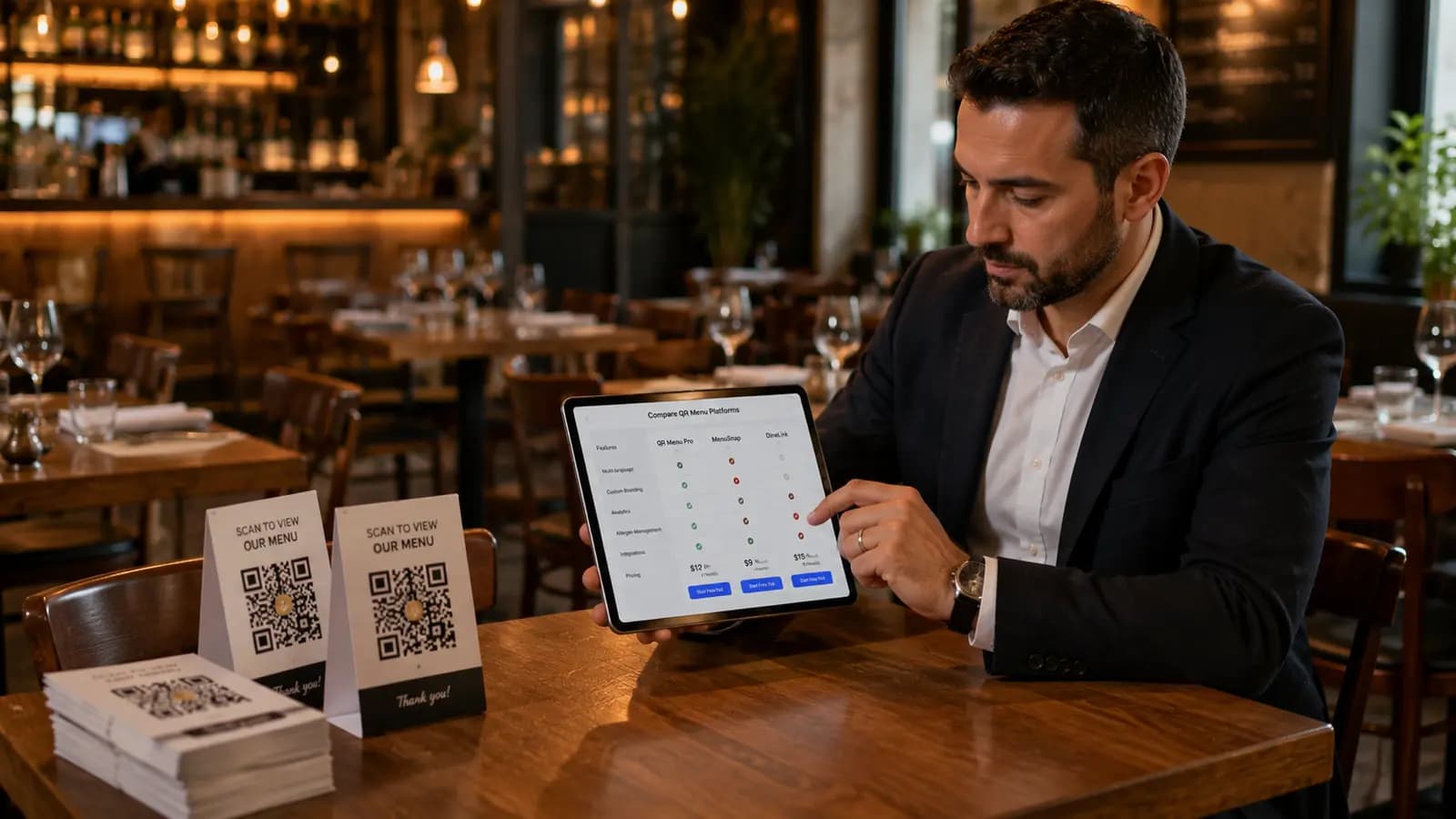
Yes, provided the allergen information is genuinely accessible to the guest before they order, and is presented with the required emphasis. A QR code menu satisfies EU allergen requirements when each dish carries its own allergen declaration, the information is current, and guests are not required to download an app or create an account to read it.
Where QR menus outperform print is maintenance. A printed menu is accurate on the day it is printed and drifts from that moment on — every recipe tweak, every supplier substitution, every seasonal swap. A digital menu with structured allergen fields updates once and is correct everywhere, in every language, immediately.
Two practical requirements often overlooked:
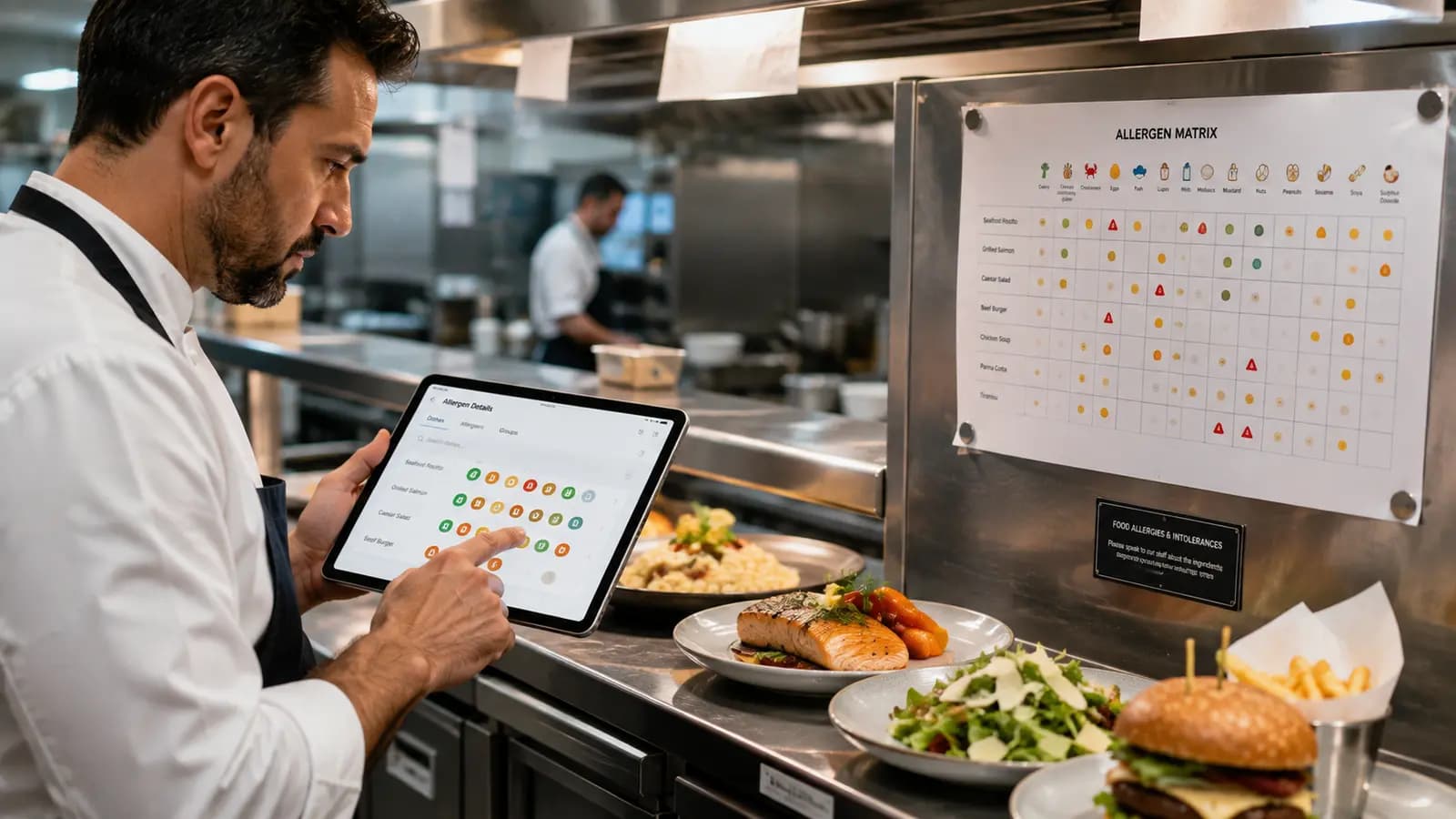
- Keep a non-digital fallback. Guests without a smartphone or data must still be able to get the information, so keep a printed allergen matrix behind the bar.
- Translate the allergen data, not just the dish names. An allergen tag that stays in the local language on an English menu does not inform the guest.
Six Mistakes That Cause Failed Inspections
- Allergens buried in dish descriptions. Free text is not emphasis, and it does not survive translation or a rushed menu edit.
- Blanket "may contain" disclaimers. A precautionary statement does not replace declaring an allergen that is genuinely an ingredient, and using it everywhere makes it meaningless.
- Forgetting stocks, oils and garnishes. Celery in stock, sesame on a bun and butter finishing a sauce are the three most commonly missed declarations.
- Specials not covered. The board special has the same legal status as a printed menu item.
- Drinks left out. Wine, some beers and several cocktail ingredients carry declarable sulphites.
- No written signposting. Where information is given orally, guests must be told in writing that it is available.
Putting It on Your Menu
The workable approach is to stop treating allergens as text and start treating them as data. Tag each dish with the allergens it contains, once, in a structured field. The menu then renders those tags consistently across every category, every language and every device — and an update to a recipe is a single change rather than a search-and-replace across a document.
QR Menu Generator provides a dedicated field for each of the 14 Annex II allergens on every menu item, so the declaration travels with the dish and is emphasised automatically in the guest-facing menu. Combined with AI menu translation, the allergen tags stay correct in each language rather than being re-typed by hand.
You can read more on the EU allergen compliance page, review the full feature list on the features page, or create a compliant digital menu for free and add allergen tags to your first few dishes to see how it works.
This article summarises Regulation (EU) No 1169/2011 for general information. National implementing rules and penalties vary by Member State — check your national food safety authority's guidance, and treat this as a starting point rather than legal advice.
Frequently Asked Questions
- What are the 14 allergens listed in EU Regulation 1169/2011?
- The 14 allergens are cereals containing gluten, crustaceans, eggs, fish, peanuts, soybeans, milk, nuts, celery, mustard, sesame seeds, sulphur dioxide and sulphites, lupin, and molluscs. They are set out in Annex II of the Regulation and must be declared whenever present.
- Do EU allergen rules apply to restaurants or only to packaged food?
- They apply to restaurants. Restaurant food is non-prepacked food, and Article 44 of Regulation 1169/2011 makes allergen information mandatory for it. There is no exemption based on the size of the venue, and the obligation covers daily specials and drinks as well as printed menu items.
- Does a QR code menu meet EU allergen requirements?
- Yes, if the allergen information is accessible to guests before they order, is accurate at the time of service, and is emphasised so it stands out from other ingredient information. Guests should not need an app or an account to read it, and a printed fallback should be available for those without a phone.
- Which of the 14 allergens has a quantity threshold?
- Sulphur dioxide and sulphites are the only entry with a numerical threshold. They must be declared at concentrations above 10 mg/kg or 10 mg/litre, expressed as total SO2. Wine, dried fruit and several preserved products commonly exceed it.
- What does it mean that allergens must be emphasised?
- Under Article 21, allergens must stand out clearly from the rest of the ingredient information through typeset, style, background colour or another distinguishing feature. Bold text or capitals work on print; on a digital menu, a dedicated allergen field rendered as distinct tags is more reliable.
- Is a 'may contain' warning enough to satisfy the rules?
- No. A precautionary 'may contain' statement addresses cross-contact risk. It does not replace declaring an allergen that is genuinely an ingredient of the dish, and applying it to every item weakens its meaning for guests who rely on it.
About the author
Evrenus Fırat Polat
Restaurant technology expert and founder of QR Menu Generator. Passionate about helping restaurant owners harness digital tools to grow their business.